
By Kathleen McGowan
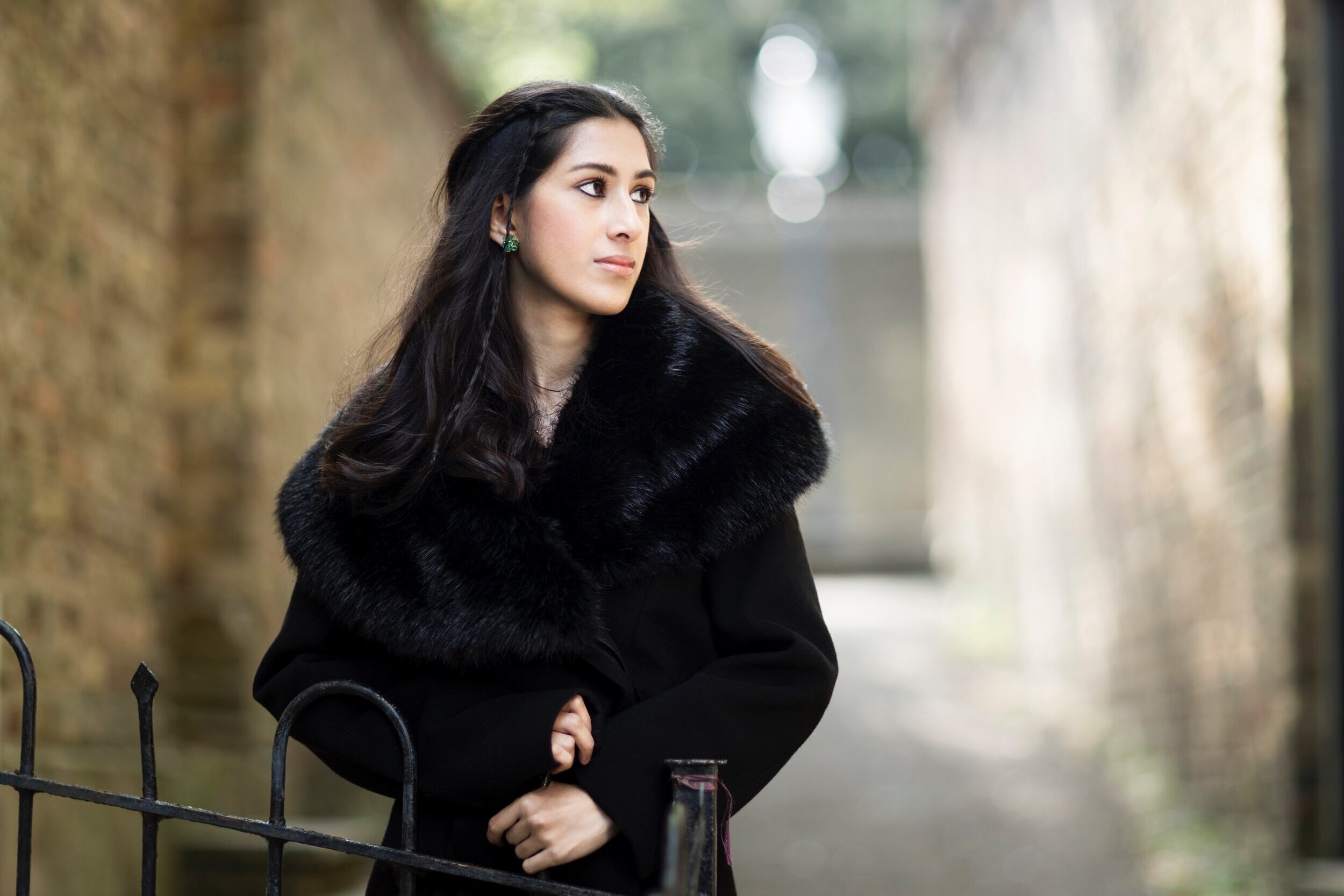
Mishka Rushdie Momen, Pianist
Lots going on in mid-January 2026!
On January 17th, 2026, the Isle of Wight Symphony Orchestra will present a concert of music by pioneering female composers under the baton of guest conductor James Thomas. The orchestra opens the concert with Elizabeth Maconchy’s Proud Thames coronation overture (1952–3), which has appeared previously in these pages as one of Maconchy’s best-known works for orchestra and as a showcase of her writing for wind instruments. Following the overture will be Clara Schumann’s Piano Concerto in A minor (1835), performed by soloist Mishka Rushdie Momen. The concerto, “a fascinating piece full of youthful energy,” offers Momen opportunities to show off her skill with an orchestra and as a chamber musician with the piano/cello duet in the second movement. The largest and final work on the concert is Florence Price’s Symphony No. 1 (1931–33), which blends influences from western classical music with west African rhythms, dances, and spirituals, and was Price’s first major work for orchestra. Winning first place in the Rodman Wanamaker Competition in the symphonic works category, it drew the attention of conductor Frederick Stock who programmed the symphony for the Chicago Symphony Orchestra in 1933. Thus it became the first symphony by a Black woman to be performed by a major U.S. orchestra.
The LunArt Festival has announced the winners of its 2026 Call For Scores. The four winners—Madeline Barrett, Joan Johnson Drewes, Yurui “Rain” Hou, and Leah Reid—were selected from a pool of 208 applicants in 2025. The selection committee described the winners as staining out for their “exceptional artistry, originality, and compelling musical voices.” The pieces are written for two for large ensembles, Barrett’s The Body a Tree for treble choir and piano and Joan Johnson Drewes’s Distant Murmurings for treble choir, and two smaller chamber ensembles, Yurui Hou’s Manhattan Suite for flute and piano and Leah Reid’s Crossed Wires for viola, percussion, and electronics.
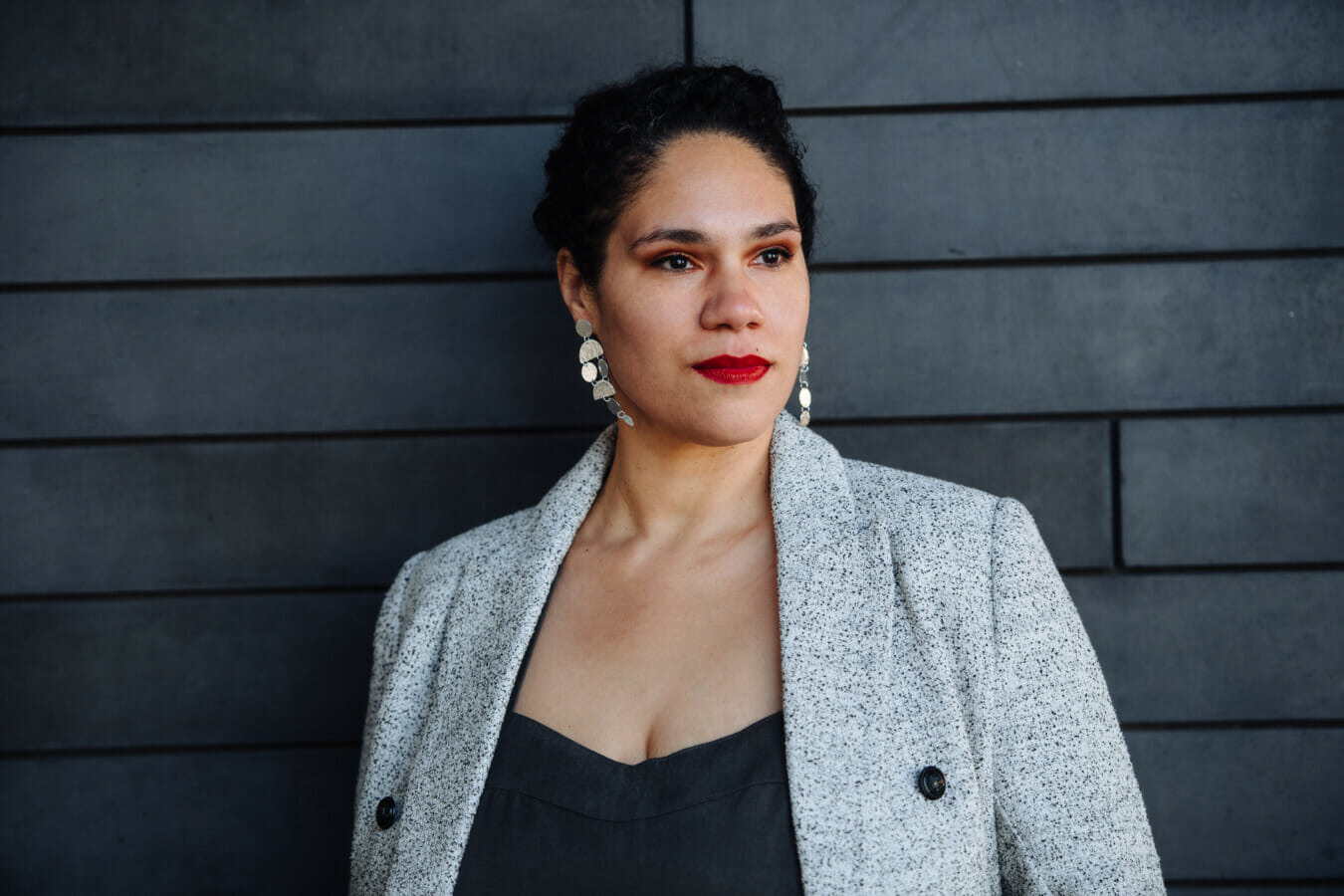
Jessie Montgomery, composer
Photo Credit: Jiyang Chen
In 2026 we look forward to hearing much of composer Jessie Montgomery’s music performed by the Boston University Center for New Music. Montgomery has been named as an artist in residence at BUCNM for the 2025–26 season. The centerpiece of her residency will be the BU Wind Ensemble performing her Coincident Dances at Symphony Hall on April 13. Originally written for orchestra in 2017, the concert band arrangement was commissioned by the College Band Directors National Association in 2024. Two other events featuring her music will take place during the spring semester: a concert (date TBA) where her work will appear alongside work by BU students whom she has mentored during her residency performed by the Mivos String Quartet, and a faculty showcase concert planned for January 30th where BU faculty and student performers will perform their chosen pieces from Montgomery’s repertoire. These artists have worked with Montgomery in preparing their pieces. In addition to hearing Montgomery’s work, which is always thrilling, her residency should offer a first hearing to some other young composers who are taking direction from her.
Below is a recording of her original orchestral Coincident Dances, performed by Canada’s National Arts Center Orchestra under the direction of Andrew Shelley.
The Women Composers Festival of Hartford has announced that it will return in March 2026 for its 25th Anniversary. Seattle-based composer and pianist, Kari Cruver Medina, will be the festival’s composer-in-residence; one of her works, Viriditas; The Greening for orchestra, was nominated for the American Prize in the orchestral division. The chosen ensemble-in-residence is the soprano/clarinet duo The Whistling Hens, who describe their mission as creating “performance experiences that integrate exceptional music, advocacy of women composers, and music history and education.”
Below is a recording of Medina’s Viriditas, performed by the Northwest Symphony Orchestra under the direction of Anthony Spain. In her note for the piece, Medina describes the title as one coined by Hildegard of Bingen, as a way of describing “the natural driving force toward healing and wholeness, the vital power that sustains all life’s goodness.”
On January 14, 2026 the BBC Philharmonic performs a concert taking inspiration from the four seasons—the times of year, not the famous work by Vivaldi. Kaija Saariaho’s Winter Sky (Ciel d’Hiver, the second movement of her Orion suite) makes for a cold, ethereal opening, evoking the clarity and beauty of a clear sky on a winter’s day. Following is Lili Boulanger’s D’un matin de printemps, which captures the fresh joy and optimism of a spring morning. (Also appearing will be Felix Mendelssohn’s A Midsummer Night’s Dream and Edvard Grieg’s In Autumn). As WPA detailed in our end-of-year (2025) album surveys, the BBC Philharmonic has been recording and producing a number of stand-alone albums dedicated to the work of women composers, including Grace Williams, Avril Coleridge-Taylor, and Ruth Gipps.
Below is a recording of Saariaho’s fabulously seasonal Winter Sky, performed in December 2017 by the Stanford University Symphony Orchestra.
We hope you enjoy hearing about some of what’s going on! Let us know what you’re listening to! Email us at info@wophil.org