
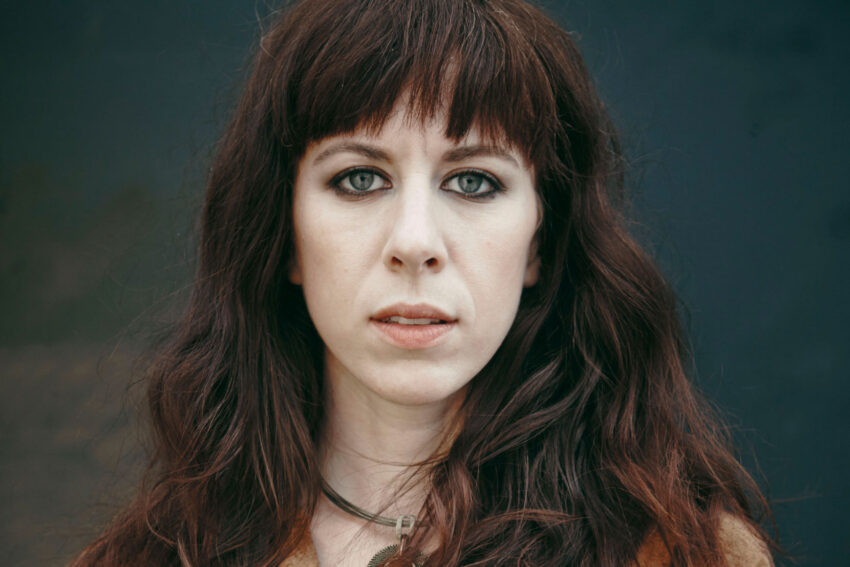
Missy Mazzoli, composer
Huge news for women in music! The Metropolitan Opera (New York) has premiered an opera by a woman for the first time in its 143-year history. Missy Mazzoli’s Lincoln in the Bardo opened on October 19th, and will run through November 14, 2026. The work is a co-commission of the Metropolitan Opera and the Santa Fe Opera. Mazzoli joins a very small club of women composers whose operas have had Met premieres; three recently: Gabriela Lena Frank (El Último Sueño de Frida y Diego), Jeanine Tesori (Grounded), and Kaja Saariaho (L’Amour de Loin, Innocence), and one historical: Dame Ethel Smyth (Der Wald, 1903).
Mazzoli’s opera is based on the 2017 experimental novel of the same name by George Saunders, and imagines the liminal grief-space between death and acceptance. The opera takes place in the bardo—a transitional place in Tibetan Buddhism between two states of existence, in this case death and rebirth. The title character, Abraham Lincoln, is grieving the death of his 11 year-old son Willie. Historically we know that Lincoln made frequent visits to his son’s grave at night shortly after his death; the bardo setting allows the opera to imagine his grief more closely and to incorporate some humor and insights from the ghosts in the cemetery who struggle to comprehend him as well s their own in-between status. A recent review of the premiere by Stephanie Boyd can be read at I Care If You Listen.
For those who can’t make it to New York: the Metropolitan Opera has released a few excerpts ahead of the premiere, and assures opera fans that the performances from October 19 and November 11 will be broadcast live on the Met’s SiriusXM app channel. A TBA recording of a fall performance will also be broadcast on The Robert K. Johnson Foundation–Metropolitan Opera International Radio Network on February 13. In addition, these broadcasts will be available to streamed on the Met’s website, metopera.org.
In addition, the composer was interviewed by CBS ahead of the premiere:

Hildur Guðnadóttir, composer & cellist Photo Credit: Dan Doperalski
On October 23, cellist and composer Hildur Guðnadóttir released This Will be Us (Deutsche Grammophon, 2026). The album marks twenty years since Mount A, her debut album, and offers listeners eight orchestral re-imaginings of previous works and two newly-written pieces. Her early solo albums Mount A (2006), Without Sinking (2009) and Saman (2014) were the inspiration for the orchestral re-writes and source of the pieces. In addition to being composer and producer, she is also the featured soloist—performing with Robert Ames and the Deutsches Symphonie-Orchester Berlin. Her two new pieces, The Song That Never Was and Blind Sarabande fit right in with these new versions of her older works, and yet bring the gravitas of her experience and work to them. Her style tends toward the serious and dramatic, though there are moments of unmistakeable joy (as in the opening of Opaque). It’s easy to imagine her orchestration style fitting right in to a miniseries adaptation of Villette or Middlemarch.
Composing orchestral versions of her earlier work has allowed her to realize a long-held ambition. She described the process to DG as, “When I was [a younger composer and performer, I was] trying to be a one-person string orchestra, [and] I always dreamed of having more people playing with me … I decided to give that young person the anniversary gift of hearing her music played by an orchestra.”
Two upcoming screenings of Dear Lara are happening in Ontario, Canada. On November 6th it can be seen as part of the Windsor International Film Festival. On November 7th, it can be seen as part of the Stratford Film Festival. Future screenings can be found as soon as they are scheduled on the film’s website, dearlara.film. Additional resources for taking action are also available there.
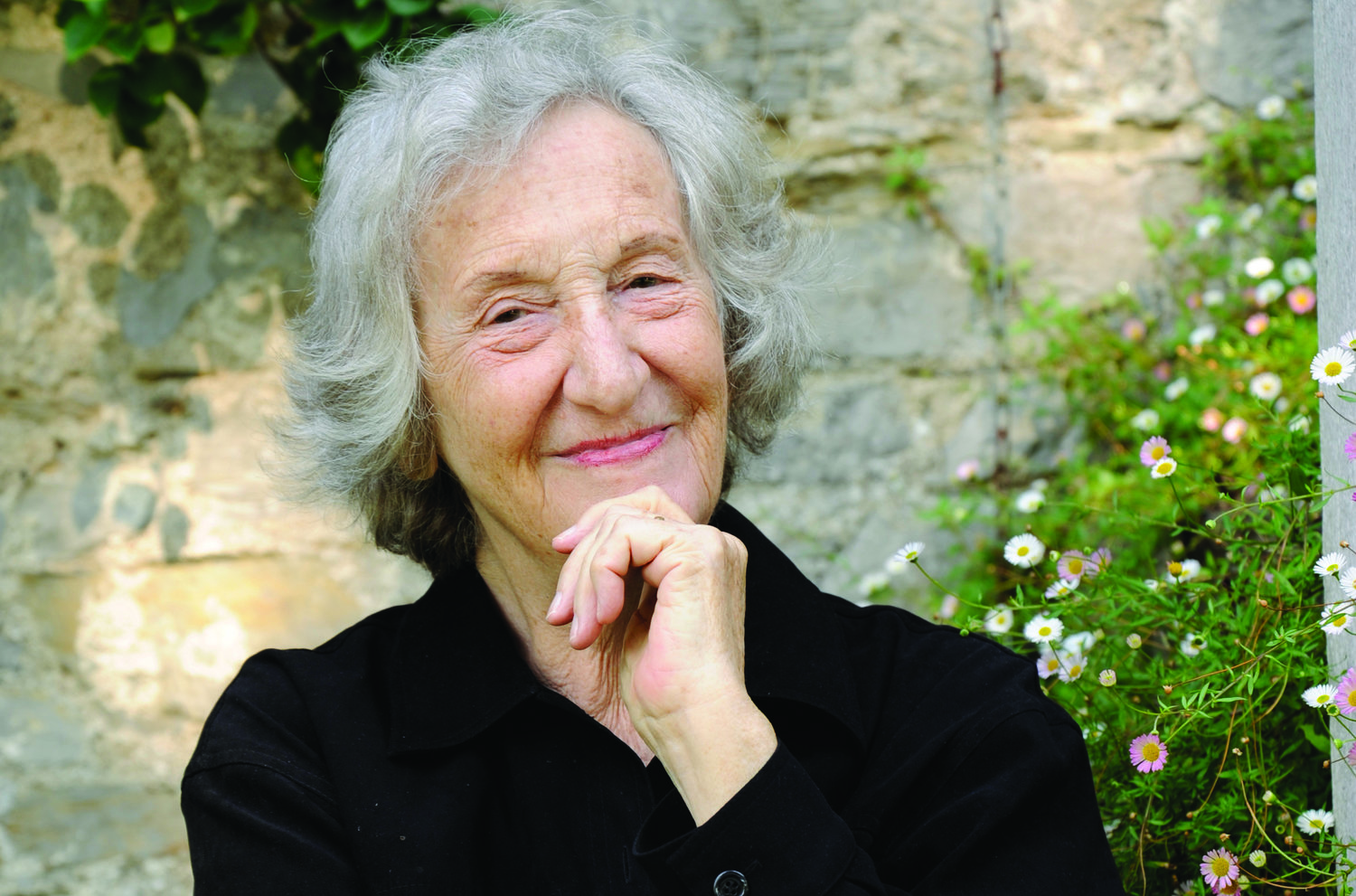
Thea Musgrave, composer
On October 27, the American Composers Orchestra honors Thea Musgrave as their Artist Honoree at their Gala & Creative Catalyst Awards this year. Musgrave is approaching her centennial in 2028, and this is one of many events planned by orchestras and orchestral organizations in anticipation of celebrating an enormous milestone for one of the most respected contemporary composers alive.

Golfam Khayam, composer
On October 29 & 30, conductor Barbara Hannigan will lead the Munich Philharmonic in a program that includes Iranian composer and improviser Golfam Khayam‘s I am not a tale to be told (Je ne suis pas une fable à conter) for soprano und orchestra.
In addition to composing, Khayam is currently guest Assistant Professor at Art University of Tehran. Her research project “New Vocabulary” has focused on synthesis and cross-cultural fusion in contemporary art music—a process that creates space for exploring the role of improvisation and what it can bring to musics of different traditions when they meet. She is also an active clinician, and has given workshops on improvisation and synthesis at the Aarhus Royal Academy, Copenhagen Royal Music Academy, Geneva University, and Luzern Music University. She was named composer in residence for ENOA network for Opera creation with Palau de les Arts Reina Sofía.
Included here, Khayam and Hannigan offer a “talkback” for the work with insights into their collaboration and the formation of the piece. It was originally premiered on June 15, 2023 in Rejkjavík (IS) by the Sinfóníuhljómsveit Íslands (Iceland Symphony Orchestra) under Hannigan’s commission with the Iceland Symphony Orchestra & L’Orchestre Philharmonique de Radio France.
The Boulanger Initiative is offering Feminist in the Concert Hall readers a discount on a 3-pack of passes for their upcoming Virtual Conversation series on contemporary women in opera. Attendees will join Boulanger Initiative co-founder Dr. Laura Colgate for three conversations with leading women composers about the stories, ideas, and creative processes behind their operas. The lineup features Sarah Kirkland Snider’s Hildegard (October 27, 2026), Missy Mazzoli’s Lincoln in the Bardo (December 9, 2026), and Gabriela Lena Frank’s El Último Sueño de Frida y Diego (March 20, 2027). Each talk will stream from 6–7pm Eastern Time. Tickets are available using the Virtual Conversation link above, and readers should use the discount code WPA5OFF toward the purchase of tickets for all three talks.

Elisabeth Lutyens, composer
Finally, if you’re planning to watch any classic horror films to celebrate Halloween this year, you may run into the music of composer Elisabeth Lutyens. She is widely regarded as the first British woman to compose music for film, and composed music for both Hammer and Amicus studios in addition to concert works and documentary film soundtracks. The influence of Schoenbergian serialism on Hammer’s early sound is a consequence of her work. Her horror debut, Never Take Sweets From a Stranger (Hammer, 1960), remains disturbing 66 years later, and Paranoiac (Hammer, 1963) plays with diegesis. Dr. Terror’s House of Horrors (Amicus, anthology 1965) is perhaps her most famous work in this genre, and The Skull (Amicus, 1965) shows a marked difference between her work for Hammer and for Amicus.
Let us know what you’re listening to! Email us at info@wophil.org, or use our handy contact form.