
We have a range of interesting stories for you to start your week!
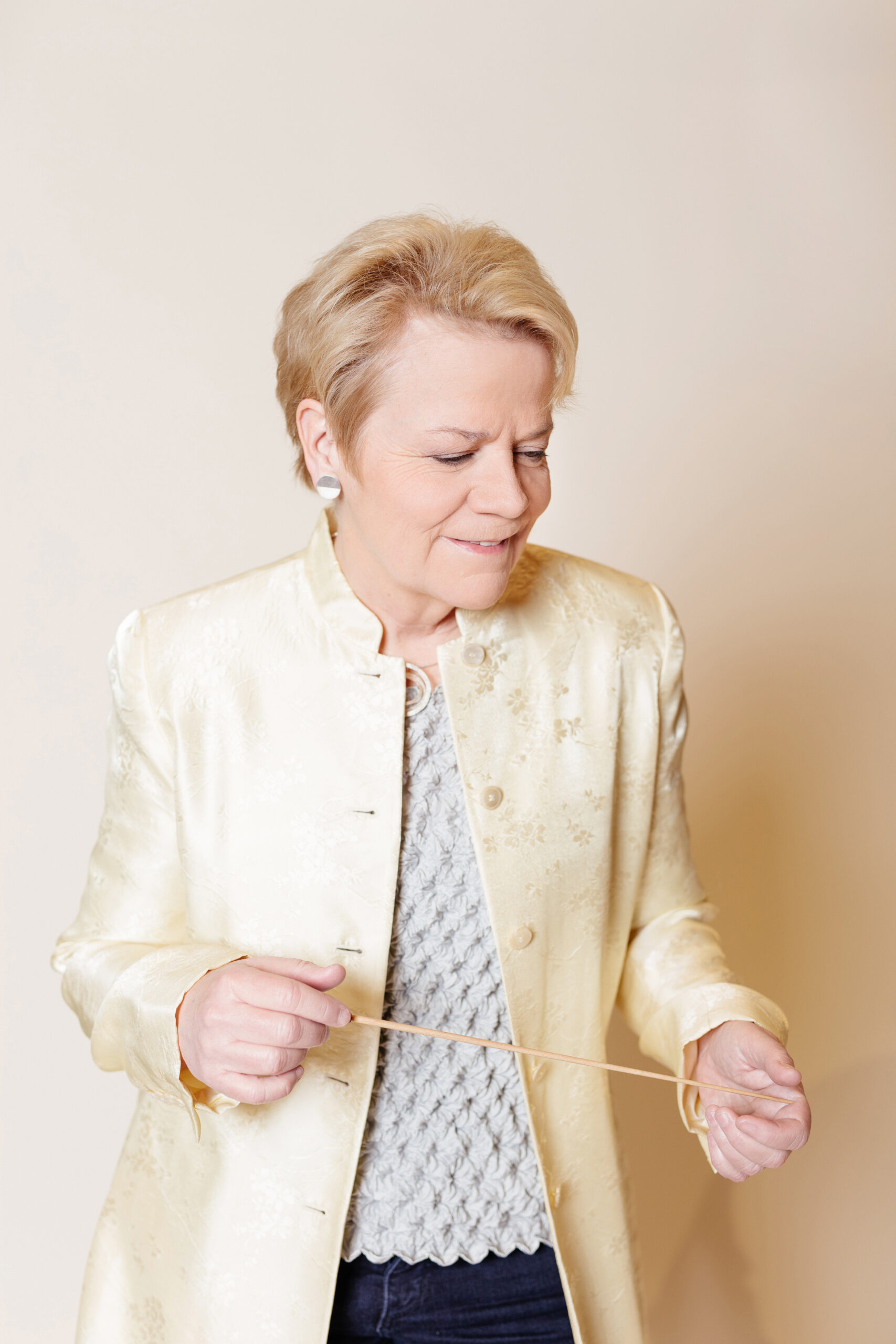
Marin Alsop, conductor. Photo Credit to Theresa Wey
On May 24th, Marin Alsop was announced as the Festival Director of the 2027 May Festival in Cincinnati, OH. The Festival takes place next year from May 17-30, 2027. Among its large works will feature the U.S. premiere of a new work by composer Anna Clyne, Roxanna Panufnik’s Across the Line of Dreams (2020), as well as Julia Wolfe’s Fire in My Mouth for choir and orchestra (2019). Wolfe was Festival Director in 2024, and wrote Fire in My Mouth in 2019 to commemorate the 1911 Triangle Shirtwaist Factory fire and its aftermath as a core historical event in the history of immigration in the United States; Panufnik’s Across the Line of Dreams commemorates the ratification of the 19th Amendment conferring US women the right to vote.
Other works will include Rimsky-Korsakov’s Scheherazade with its powerful titular storytelling character, and a version of Beethoven’s Symphony No. 9 with text by former Poet Laureate of the U.S. Tracy K. Smith. Alsop is a regular at the May Festival, having conducted for it several times before. As in many of her other directorial endeavors, she brings her combined enthusiasm, advocacy, and creativity to the podium in her repertoire choices and her approach to directing the ensembles before her. Together with the festival’s Director of Choruses Matthew Swanson she will lead a series of concerts that celebrate the power and presence of women through music.
Below is the movement “Protest” (Section III) from Wolfe’s Fire In My Mouth, performed by the New York Philharmonic and members for the Young People’s Chorus of New York City in March 2021.
Claire Fontijn, Professor of Music, Wellesley College. Photo Credit: Joel Haskell
On May 28, 2026, Antonia Bembo’s opera Ercole Amante (1707) was scheduled for its modern premiere at the Opèra Bastille in Paris. (The premiere was further delayed due to a strike, but the opera is now in performance through June 14.) Claire Fontijn (Professor of Music, Wellesley College) has offered an account in The Conversation of the opera’s history, the composer’s circumstances in writing it, and its presence onstage in 2026.
Fontijn has been studying the music of Antonia Bembo since 1990—when the composer’s name was a barely-registered indication on the title pages of obscure scores, and scholars did not have enough scattered facts about her life to place her accurately in history. In her account for The Conversation, Fontijn describe a situation that sounds all too familiar: “Once I confirmed that she was not born into, but had married into, the patrician Bembo family, I was able to not only identify her, but also tell her story in my 2006 biography, “Desperate Measures: The Life and Music of Antonia Padoani Bembo.” Tracing historical woman composers often involves a perverse kind of reverse-scavenger hunt through the records of the male members of their families. Bembo has another reason to be difficult find however: she spent much of her life on the run hiding from an abusive husband. She fled to Paris in 1677, and her Venetian training earned her a place in a women’s residential community after singing for Louis XIV. Only after her husband’s death in 1703 did she feel free to assemble and publicize her manuscripts of cantatas, celebratory motets, and music dramas.
While this Parisian event is the first modern staged performance, the work was recorded last year by Il Justo Barocco and we also must give credit to the Boston-based ensemble La Donna Musicale whose recordings and performances of a range of Bembo’s work during the 2000s, including the complete Seven Psalms of David, did much to generate interest in the composer.
One June 7, Chineke! Orchestra performs Florence Price’s Symphony n. 1 on a program celebrating the music of Black composers at the Southbank Centre in London. Njioma Chinyere Grevious (violin) will be the featured soloist for Samuel Coleridge-Taylor’s Violin Concerto in G minor, Op.80; the orchestra performs Carlos Simon’s 4 Black American Dances for orchestra and Florence Price’s Symphony No. 1. Price’s symphony has been enjoying a lot of attention recent years; its claim to fame is as the first symphony by a Black woman performed by a major U.S. orchestra—Chicago in 1933. Its historic status has earned it a place as a crown jewel of the Florence Price revival, but this isn’t what keeps audiences coming back to it. Price’s work is both lyrically and rhythmically vital—it has good tunes and danceable rhythms—combined with her emotive orchestral writing that makes great use of all the different timbres the early 20th-century ensemble had to offer. (I’m personally grateful that she doesn’t leave the low brass sitting in the back like a handful of spare parts, but finds work for them throughout! :-D)

Olivia Pérez-Collellmir, composer
On June 10, Marin Alsop conducts the London Philharmonia Orchestra at the Palau de la Música, Barcelona. The concert’s headline work is the world premiere of Olivia Pérez-Collellmir’s Els set somnis de Gaudí (Seven Dreams of Gaudí) for orchestra and choir, with words by Catalan poet Anna Gual. The concert observes the 100th anniversary of death of Antoni Gaudí. Pérez-Collellmir writes music that blends the influences of her European roots with techniques and ideas from her American education. She studied at the Conservatori Superior de Música de Barcelona and later the University of Barcelona; she studied music and philosophy and education there before receiving a full scholarship to the Berklee College of Music in Boston. She is the first Catalan, and the first Spanish pianist ever appointed to the faculty of Berklee College of Music.
Let us know what you’re listening to! Email us at info@wophil.org