
A Note from Editor Liane Curtis: In the late 1980s when I was completing my PhD in musicology, I remember hearing Dr. Nancy Reich give a presentation on her work on Clara Schumann, and it is no exaggeration to say it was a turning point for me, to have this exposure to research that focused on a woman subject. Here — for the first time, in my experience — a woman composer was being taken seriously in scholarship that was both exacting and exciting. I was fortunate to have Nancy Reich as a friend and mentor as I turned to the direction of feminist scholarship. Now I am happy that Sarah Fritz’ new book is reinvigorating interest in Clara Schumann, introducing her to new generation of readers, as well as asking probing questions about reception and historiography. And yes, I have bought the book!
We are very happy to have Sarah Fritz, author, music historian and mezzo-soprano, as a guest blogger with us today!
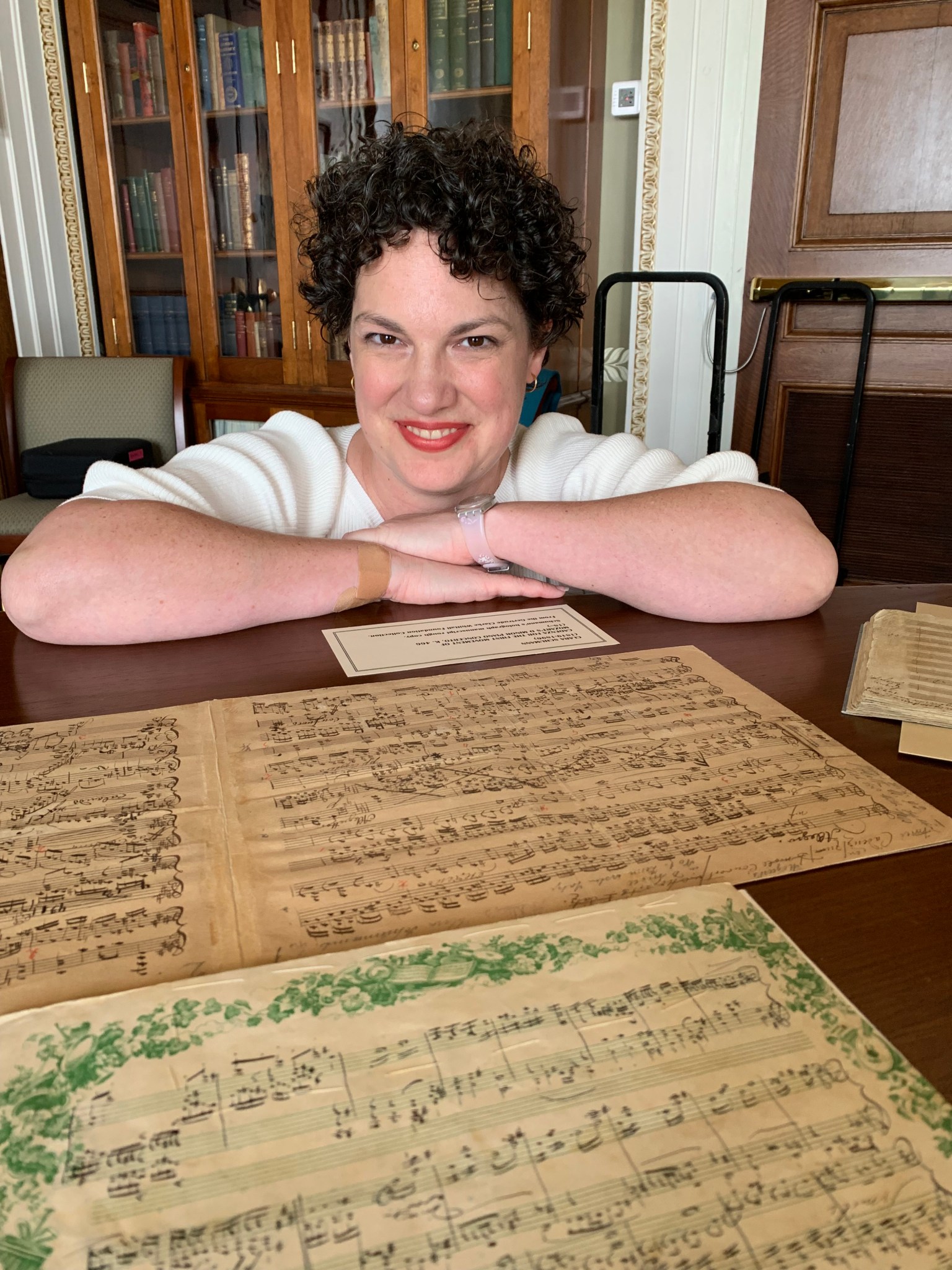
Author Sarah Fritz
By Sarah Fritz
As a sophomore in music school in 2003, a professor gave me the second edition of Nancy B. Reich’s Clara Schumann: The Artist and the Woman. The book changed my life. It awakened my rage at hearing criminally little music by women in my six years of academic music education.
Fast forward 18 years, during a project born of pandemic boredom, I started tweeting on social media everyday facts about Clara Schumann. I was shocked to find thousands of people as fascinated by Clara as me, except I also found very few had read Reich. Most of the information about Clara the public gleaned from biographies of Robert and Johannes, books which can’t help but portray her as a sideshow and rarely, if at all, mention her compositions.
What saddened me most were the distasteful myths. Odd misunderstandings persisted, like the belief that Clara was only famous because of her husband. (It was the other way round; she made him famous with her concerts. He was “the husband of Clara Wieck” during their marriage!) My heart broke when I learned that, because of a popular out-of-context quote, many living women composers felt they couldn’t see Clara as a role model. The too-often misused “a woman must not desire to compose” which Clara wrote in her diary in a moment of imposter syndrome at age 20-year-old was actually in response to insecurity about another women composer, Marie Pleyel. The next week, Clara was pondering composing fugues.
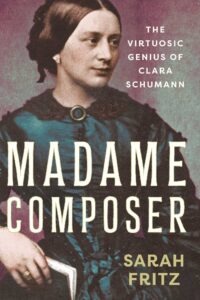
What were women composers, not just Clara but others, really up against in the 19th-century? How did they dare to compose anyway? That’s the real central exploration of Madame Composer.
 There’s also the undying slander about Clara’s relationship with Johannes. I argue, the supposed love affair is actually a cover up for a bigger scandal: how much Clara mentored, taught, and influenced him. In the book, I highlight how he studied, performed, and even quoted her compositions in his.
Sadly, the publishing industry is no less patriarchal than classical music. The only way to get Clara back in bookstores was a new biography, published by a traditional publisher. I happened to meet Susanna Reich recently, the daughter of Nancy B. Reich. She shared with me that her mother tried to find a traditional publisher for her biography in the 1980s but was rejected by literary agents. So she went with a university Press. I got very lucky; I found a wonderful literary agent and a traditional publisher. Even so, as much as I would love to write more books about other women composers who are far more dire in need of exposure than Clara, if Madame Composer: The Virtuosic Genius of Clara Schumann doesn’t sell — and well — they won’t let me.
I peppered into Madame Composer, as many women composers as I could, 42 in all. In the epilogue about Clara’s legacy in the 20th century, I mention The Women’s Philharmonic’s historic 1992 recording of JoAnn Falletta conducting the Wieck Concerto, with works of Hensel, Tailleferre, and Lili Boulanger. My intent was for anyone who picks up the book to experience women composers as numerous and normalized.
I hope you’ll consider buying or requesting the book for purchase from your library, even if it’s just to prove to the publishing patriarchy that books on women composers sell! I cite Reich’s book over a hundred times. This book wouldn’t exist without the decades of groundbreaking work done by her and so many others.