

Composer Elfrida Andrée
There’s lots of music to listen to by women this week! Subscribers to our Substack will know about tonight’s performance of an all-Elfrida Andrée Concert, featuring her 1911 Suffrage Cantata. Performed by Boston University Symphony Orchestra, Treble Choir, and soprano Kristine Nowlain, directed by Sarah Ioannides, the free concert will also STREAM for those who are unable to be there in person.

© Peter Serling, 2009
On November 6th, the Rotterdam Philharmonic Orchestra & National Koren performed the Belgian premiere of Julia Wolfe’s oratorio Fire in My Mouth (2019), directed by Anne Kaufmann. The oratorio commemorates the Triangle Shirtwaist Factory fire in New York (1911). The 146 young women who perished there were mostly Jewish and Italian immigrants, and they were unable to escape the fire because factory management locked the doors to deter them from taking unauthorized breaks. Wolfe’s musical monument honors not only the women who died—all of whose names are recited in the final movement—but also the struggles of immigrants that continue into our own time. Wolfe’s work for large orchestra and chorus has proven to be one of her most popular in recent years. In addition to the RPO’s recent premiere, it had its London premiere at the Royal Festival Hall by the Philharmonia Orchestra conducted by Marin Alsop in September of this year.

Francesca Verunelli. composer
On November 9, the Vienna-based contemporary classical music group Ensemble Kontrapunkte performs Francesca Verunelli’s In margine (2022) for chamber orchestra on a program of music by living composers. Verunelli is a composer and researcher in computer music; she studied composition at the Conservatorio Luigi Cherubini in Florence and at the Accademia Santa Cecilia. She then moved to Paris, attended IRCAM’s training in Composition and Computer Music, and now holds a PhD from Paris Sciences & Lettres University. As her education suggests, Verunelli’s orchestral compositions belie her interests in computer music and technology, though she does not always use electronic elements noticeably in her pieces. Much more often, she uses the orchestra to mimic electronic/inorganic sounds using extended techniques and non-tonal musical structures. Recordings of the premieres of a number of her works for orchestra can be streamed through her website.
Included below is a recording of Verunelli’s In margine, performed in 2022 by Ensemble Resonanz. The audio is available via YouTube; the visual is a still photo of the ensemble with the composer.
A number of works for orchestra by women composers are having performances this week by various groups that are not premieres. Longtime readers of Feminist in the Concert Hall might remember how much I look out for these kinds of performances, and how important they are. Premieres of new works naturally make a lot of noise and get a lot of attention—as well they should, especially when women composers get to bring works for large ensembles to fruition. Subsequent performances by other ensembles, however, are how pieces begin to enter the orchestral repertoire or maintain a presence in it. Both contemporary works and historical ones that are being revived or re-discovered need these kinds of performances.
- On November 11, the Royal Liverpool Philharmonic performs two works by Caroline Shaw, her Entr’acte (2011) and her Is a Rose (2020) song cycle
- On November 12, the Royal Scottish Philharmonic performs Dorothy Howell’s symphonic poem Lamia (1918), a frequent favorite at the BBC Proms summer festival.
- On November 12, the Vienna Symphony (not to be confused with the Vienna Philharmonic) performs Patricia Kopatchinskaja’s Five Dreams: Cadenza (2024) for violin, cello, and orchestra.
- On November 12 and 13, the Leipzig Gewandhaus Orchestra performs two excerpts from Dame Ethel Smyth’s opera The Wreckers (1906): the Overture, and the Prelude to Act 2.
- On November 12 and 14, the Orchestre National de Lyon performs Louise Farrenc’s Overture No. 2 in E-flat major, an established piece in the repertoire and a favorite of ours at WPA.
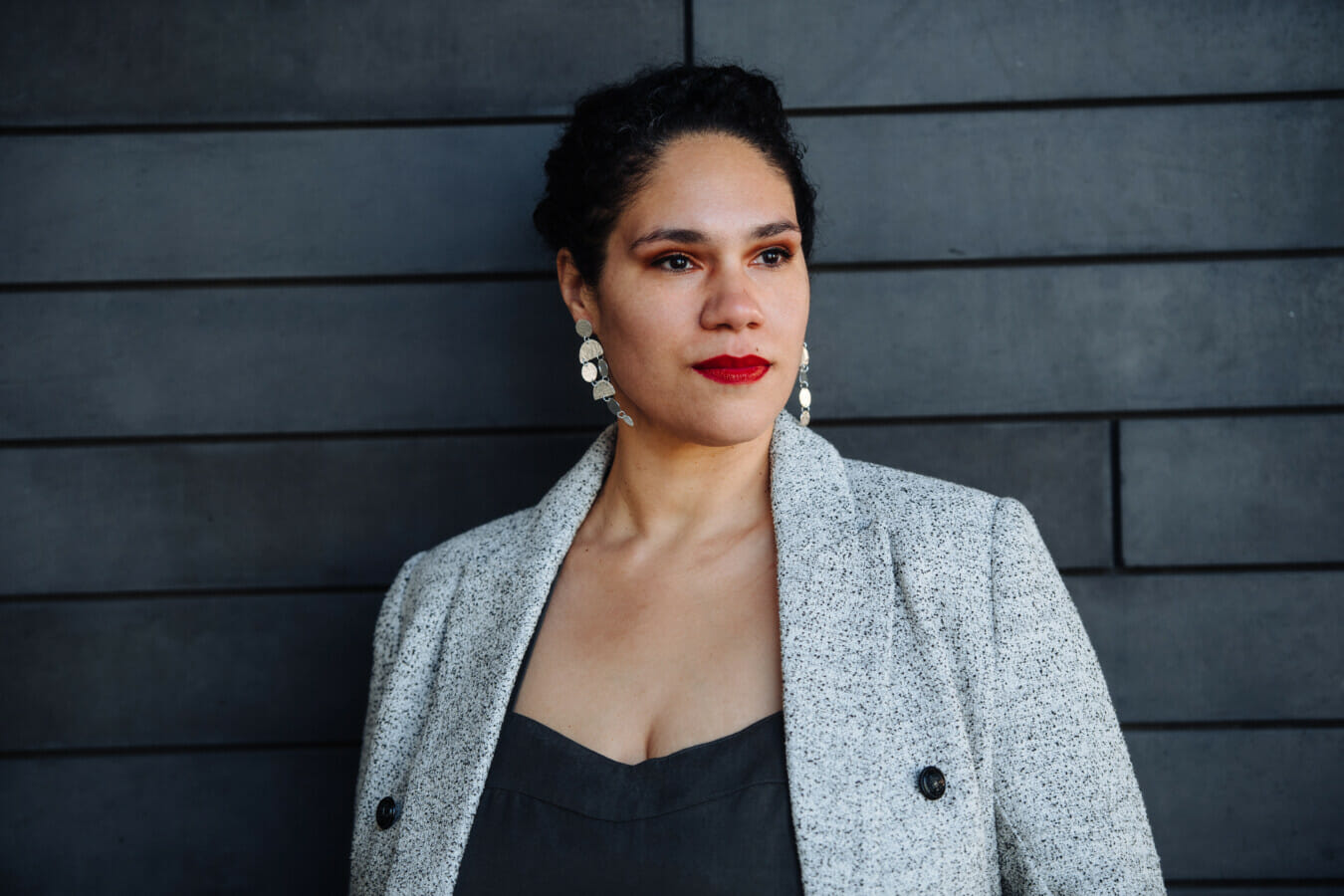
Jessie Montgomery, composer
Photo Credit: Jiyang Chen
On November 13, the National Symphony Orchestra Ireland under the direction of Anna Rakitina performs the Irish premiere of Jessie Montgomery’s Overture (2022). This is one of Montgomery’s most popular works for orchestra, and has been performed by ensembles across the United States before beginning to see popularity abroad as well. It’s easy to hear why her music has been called “turbulent, wildly colorful, and exploding with life” (The Washington Post). In one movement, Montgomery combines Baroque rhythmic gestures, harmonies that draw on both jazz and American classical music, and intense full orchestra tutti sections.
Composer and violinist Jessie Montgomery is one of the leading artists of our time. In addition to composing works for orchestra she is a founding member of PUBLIQuartet and a former member of the Catalyst Quartet. She has many prestigious awards and fellowships to her name, including: a GRAMMY award, the Civitella Ranieri Fellowship, the Sphinx Medal of Excellence and Sphinx Virtuosi Composer-in-Residence, the Leonard Bernstein Award from the ASCAP Foundation, and Musical America’s 2023 Composer of the Year. (www.jessiemontgomery.com)
Below is a recording of Montgomery’s Overture, performed by the Chicago Youth Symphony in 2022.
On November 14, the Yale Symphony orchestra with 8th Blackbird and the New Haven Chorus perform their “Spirits of America 250” celebration concert, directed by Elizabeth Askren. Works on the program include: Joan Tower’s Fanfare for the Uncommon Woman No. 1; select movements from Margaret Bonds’s Montgomery Variations (1, 2, 4, & 7); Shelley Washington’s “Nine Mothers” movement from the jointly-composed concerto Nine Mothers commissioned by Kinds of Kings; and Gabriela Lena Frank’s Apu: Tone Poem for Orchestra. (Pieces by Ives and Duffy also included).
Let us know what you’re listening to! Email us at info@wophil.org or use our handy contact form!