
On October 24th, Amy Beach and Anna Clyne come to Montana. The Billings Symphony Orchestra (Billings, MT, USA) will perform Anna Clyne’s PIVOT (2021) and Amy Beach’s “Gaelic Symphony” (Symphony in E Minor, 1894). Beach’s symphony is a classic of nineteenth-century American symphonic repertoire that uses old Irish song tunes as a basis for the composer’s musical transformations, and is a favorite of ours at Women’s Philharmonic Advocacy. (Many of her works can be found on our Amy Beach website, including a score of the Symphony in E Minor, edited by Chris A. Trotman). Clyne’s PIVOT is a contemporary work that premiered in 2021 at the Edinburgh International Festival by the BBC Symphony. Though tuneful melodies abound in its six minutes, its real distinction is its rhythmic playfulness.
Below is a 2023 recording of Clyne’s PIVOT, performed by the Orchestra Now and conducted by Andreas Salazar at the Fisher Center, Bard College.
On October 11, Coro Allegro—Boston’s award-winning LGBTQ+ and allied classical chorus—announced that it will open its 2026/27 season with a concert featuring the Boston premiere of Andrew Yee’s Trans Requiem and Ola Gjeilo’s Sunrise Mass for choir and string orchestra on November 22, 2026. Andrew Yee (she/her) is a two-time GRAMMY Award-winning cellist and composer, and and wrote the Requiem to celebrate “the beauty, resilience, and diversity of the trans experience.” The work was commissioned and premiered by Trinity Church, NYC in 2025, and was developed for trans voices, mixed chorus, and string orchestra. Director of Music at Trinity Melissa Baker described the work as “a space to mourn the lost, honor survival, and imagine a future where trans lives are honored and cherished.”
Below is a recording of the world premiere, including a link to the concert program.

Sarah Kirkland Snider, composer
On October 27, the Boulanger Initiative will present the latest installment of its series on leading women composers of opera. The talk on October 27 with BI co-founder Dr. Laura Colgate features Sarah Kirkland Snider, composer of HILDEGARD. The talks in the series offer chances to explore the stories and ideas that inspire the operas by groundbreaking contemporary women composers and a glimpse into the creative process of each in their own words.
Snider’s opera HILDEGARD was co-commissioned by Beth Morrison Projects and the Aspen Music Festival and School, and won the Music Critics Association of north America’s 2026 Best New Opera Award. The opera is a work of historical fiction exploring the life and work of twelfth-century German Benedictine abbess and polymath St. Hildegard von Bingen. It follows the title character through her life in 1147 as she receives mystic visions from God. She enlists a young convalescent Richardis von Stade to record and illustrate the manuscript of her visions that will be subjected to Papal evaluation, and ultimately decide her fate as a prophet or a heretic.

Dame Ethel Smyth, composer
From October 18 –21, Dame Ethel Smyth’s opera The Wreckers will be performed by the Badische Staatskapelle Karlsruhe and Staatsopernchor at the Badisches Staatstheater: Großes Haus (Baden-Württemburg, Germany). She began working on an opera inspired by stories of villagers in Cornwall luring passing ships on the region’s rocky coastline in the 1880s after a tour in Cornwall; her eventual opera was completed in 1904 with a libretto by Henry Brewster. Originally written in French as Les naufrageurs, it was first performed in Leipzig in a German translation in 1906, and then re-worked by the composer into an English version for performance in England. Smyth’s original French was first performed by Glyndebourne opera in 2022.

Ellen Reid, composer
On October 19, the Australian Chamber Orchestra performs Ellen Reid’s West Coast Sky Eternal (2023) for string orchestra. The piece was originally commissioned by Gustavo Dudamel for the Los Angeles Philharmonic Orchestra, and benefitted from support from the Esa-Pekka Salonen Commissions fund. The composer writes that the piece “is a study in perspective. I wrote it during a time of personal upheaval, both positive and negative, and the piece oscillates between the rhythm of life and a global sense of beauty and balance.” The piece begins with a wide-angle perspective, taking in as much of the West Coast landscape as possible from miles above before the business of living pulls listeners toward the earth.
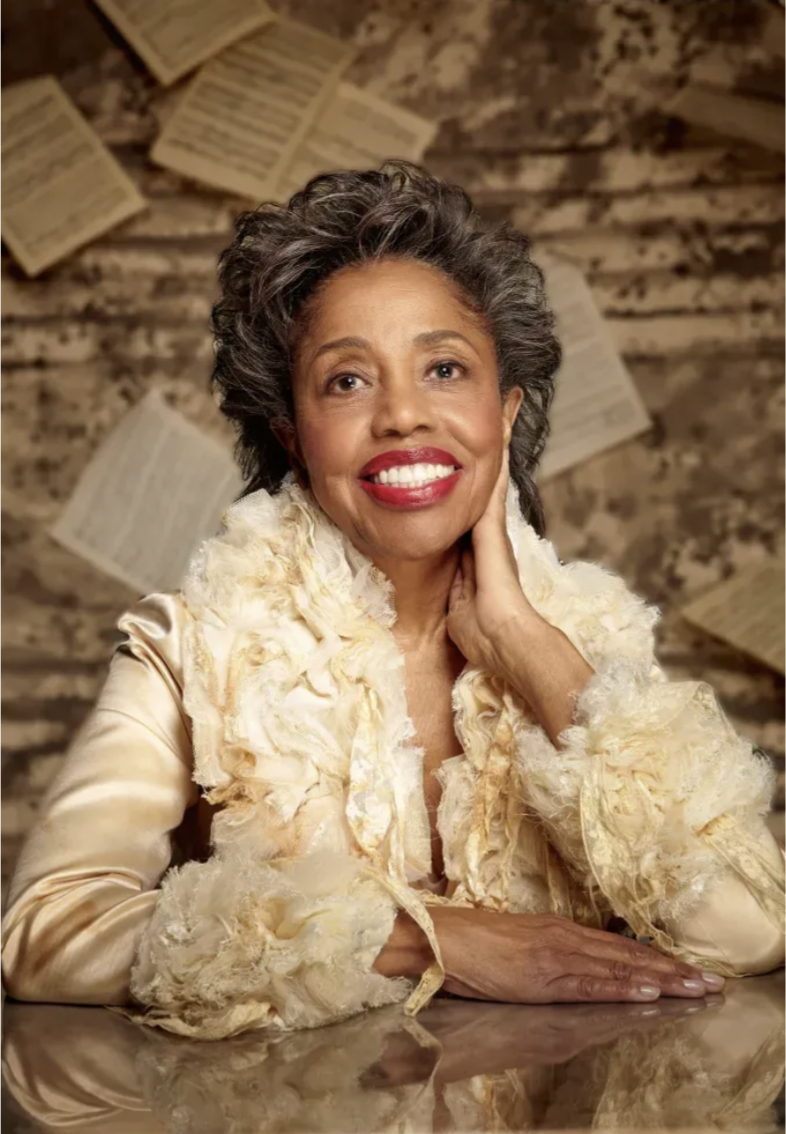
Tania León, composer
On October 21, the New York Philharmonic will perform Tania León’s Imágenes mestizas at the Musikverein (Vienna, Austria). This is one of several stops on the NY Phil’s European tour. The orchestra performed the world premiere of León’s work earlier this year on September 24, 2026 at David Geffen Hall in New York. León is a Pulitzer Prize-winning composer, and her work explores sounds from across the Americas. León regularly brings elements of her heritage into her music, and has done so throughout her musical career. She has written of her heritage: “I am who I am, thanks to my mestizo heritage and my ancestors from China, Nigeria, France, and Spain. I’m a citizen of the world with a global consciousness, and I do not like to be categorized by race, gender, or nationality. My music is my contribution to mankind. This is my heritage and I’m proud of it.” Her first orchestral work, the Concerto Criollo (1980), was commissioned by the National Endowment for the Arts, and she was the Lincoln Center Institute’s Resident Composer in 1985. Imágenes mestizas is the latest in León’s collection of orchestral pieces, performances of which are always eagerly anticipated by orchestras and performers alike.

Elfrida Andrée, composer
On October 21, the New Zealand Symphony Orchestra will perform Elfrida Andrée’s Andante quasi recitativo for string orchestra. (The score is available from Women’s Philharmonic Advocacy, edited by Dr. Jonathan Spatola-Knoll). Though this version is for more modest instrumental forces than some of her other orchestral works, the Andante seems to have been a favorite of Andrée’s as she set it four different times for various combinations of instruments.
In addition to her work as a composer, Andrée was a career organist and music director at the Göteborg Cathedral. Her time as an organist was marked by restrictions on women in Swedish law and her efforts to overcome them. Her studies at the Royal Academy of Music in Stockholm (1855–57) had to be done as an “external student” because women were barred from official enrollment. Though she passed her final exam, she had to fight a Swedish law barring women from becoming professional organists—a law that she and her father overturned in 1861. Her advocacy allowed her to have a career that few women could dream of at the time.
Let us know what you’re listening to! Email us at info@wophil.org or use our handy contact form.