
There are lots of opportunities to hear music by women this week!
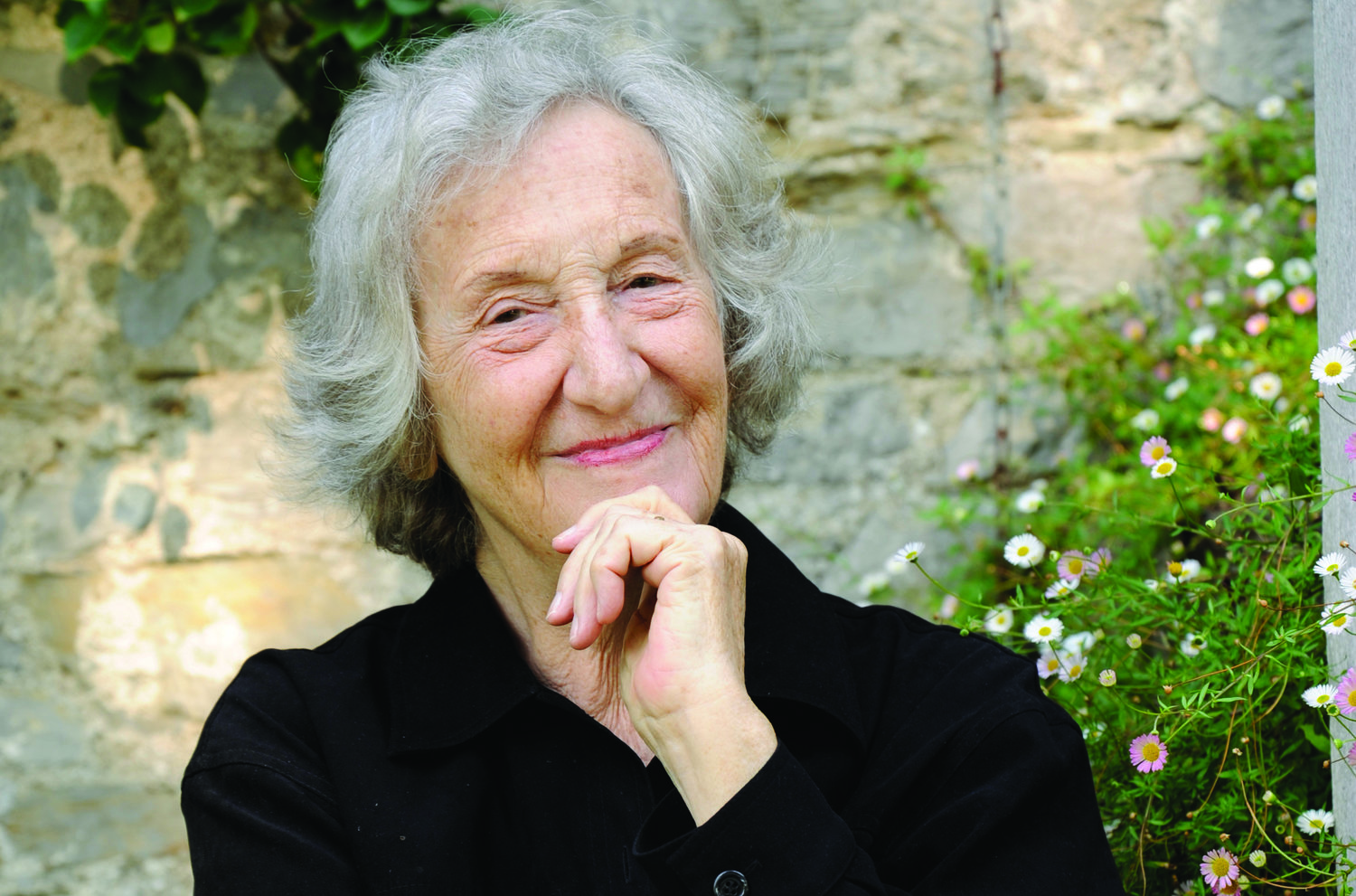
Thea Musgrave, CBE, composer
From September 20 – October 4, the San Francisco Opera Orchestra & Chorus will perform Thea Musgrave’s Mary, Queen of Scots (with both score and libretto by the composer, based on the play Moray by Amalia Elguera) at the War Memorial Opera House in San Francisco. The new production of Musgrave’s opera is directed by Clelia Cafiero. Production details can be viewed in this linked trailer for the SF Opera 2026-2027 season. While the production seemed at risk when the opera orchestra declared a strike, the musicians and managment have now reached an agreement and the season will be ablw to continue. The Sept. 26th performance will be available as a livestream, and then will be available on demand for a 72-hour period, Sept. 27-29.
Thea Musgrave (CBE) is an institution of contemporary music, both in the UK and internationally. Her opera Mary, Queen of Scots premiered in 1977 and dramatizes events in the life of the historic Scottish queen (1561–68). A young Mary returns to Scotland at eighteen to claim her throne, and discovers both the hunger for power and readiness to betray her that possess the powerful men who surround her. Originally commissioned by Scottish Opera, it premiered at the 1977 Edinburgh festival and has been produced since in the United States, the UK, and Europe.
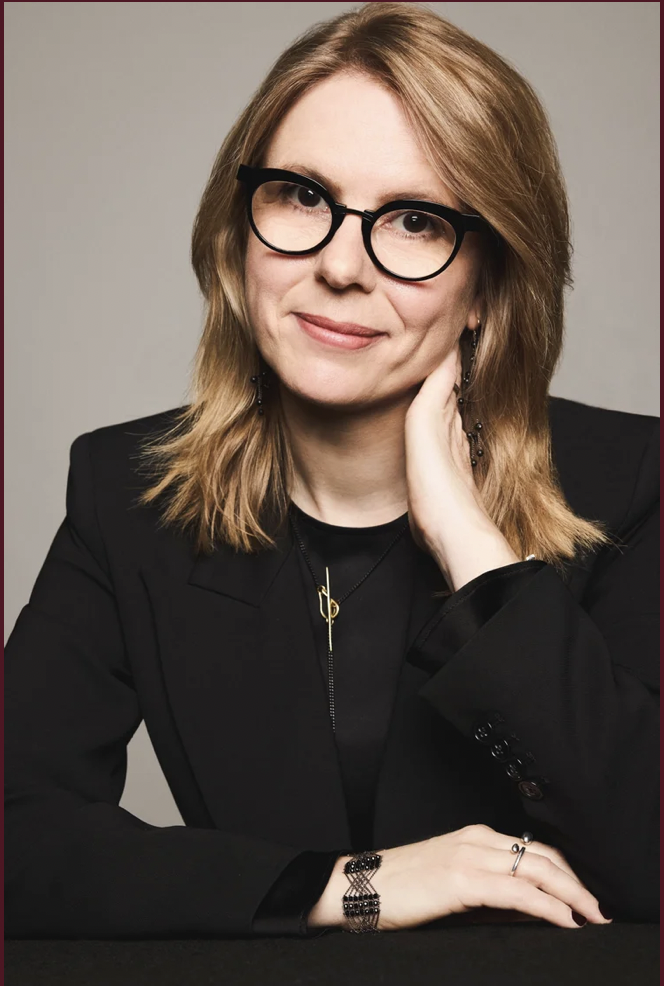
Anna Clyne, composer
On Tuesday September 22, composer Anna Clyne‘s Restless Oceans is performed by the City of Birmingham Symphony Orchestra. Clyne is the orchestra’s composer in residence for the CBSO’s 2026-27 season. In Restless Oceans, Clyne draws inspiration from the poetry of Audre Lorde, evoking the grandeur and vastness of the cosmos and the power of Black womanhood.
Restless Oceans is the first of Clyne’s major works planned for the season; others include her saxophone concerto Glasslands; her Night Ferry for orchestra; and the world premiere of Resonant Forms, her new viola concerto. Beyond the concert hall, Clyne’s residency includes collaborations with Birmingham Contemporary Music Group, educational outreach programs at the Royal Birmingham Conservatoire and the Shireland CBSO Academy, and as a featured composer with the CBSO’s Orchestral Residency Scheme for young musicians in July 2027. What a thrilling experience for so many young musicians to beable to work with her first hand!
On September 27, the Women’s Orchestra of Arizona will present its “Let’s Dance” program, featuring dance music from the classical repertoire, held at Peace in the Desert Church in Scottsdale, AZ. The WOA has been active since 2016 with founding aims to empower women musicians and enrich its larger musical community. Its members range from teenager to senior citizens and come from all walks of life and musical backgrounds.

© Peter Serling, 2009
On September 22, the Philharmonia Orchestra will perform Julia Wolfe’s oratorio Fire in my Mouth for girls’ choir, women’s choir, and orchestra, directed by Marin Alsop. It will be performed at the Royal Festival Hall, at Southbank Center, London.
Wolfe’s oratorio draws on themes of the labor movement in the United States, similar to her 2014 Anthracite Fields for which she won the 2015 Pulitzer Prize for music. As Rebecca Lentjes describes in her review of the 2019 premiere of Fire in My Mouth for I Care If You Listen, “Fire in my mouth examines the 1911 Triangle Shirtwaist Factory tragedy, during which 146 workers (mostly Jewish and Italian immigrant women) died when the building was overtaken by fire (the workers could not escape as the doors were locked to prevent them from taking breaks). Wolfe musicalizes the sounds of protest, oral history, Yiddish and Italian folk songs, and factory machinery.” The performance of specifically anti-xenophobic protest music in London in 2026 makes an unmistakeable statement about conditions under which migrant workers and refugees live in the UK and the resistance from far-right groups about their admittance to the country.
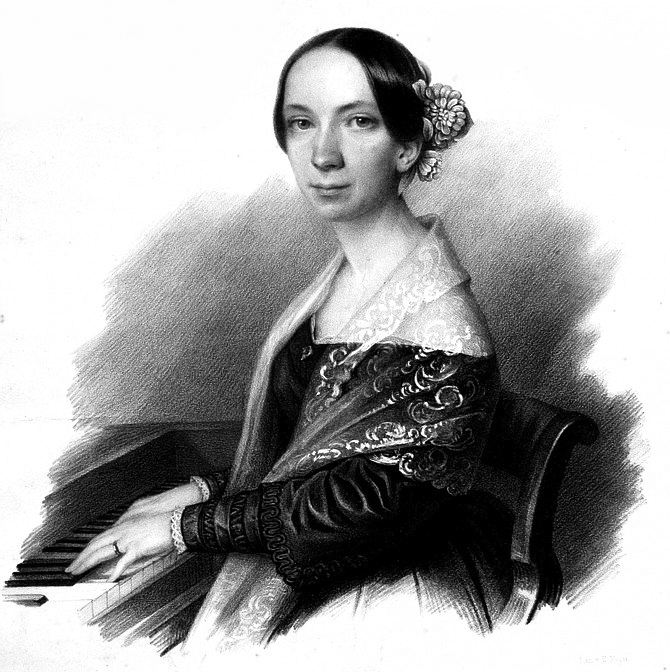
Composer Emilie Mayer (1812-1883)
On September 23, the Orchestre symphonique de Montreal will perform Emilie Mayer’s Overture No. 2 in D major on a program alongside Beethoven and Sibelius. Mayer (1812–1883) was one of the most prolific female composers of the 19th century, and she achieved wide recognition for her work across Germany/the German provinces at a time when public support of women’s music in Europe was hard to come by. Support for her work in music began in her family when she was very young—an all-too-common necessity for the handful of successful women of this period—and continued throughout her adult life, flying in the face of traditions and social conventions that pressured women to marry. Though many of her early influences came from Viennese classical music, she developed her own musical voice through the harmonic conventions and expressive contrasts that the Romantic Era found so appealing.
On September 26, Baroquelyn (Brooklyn, NY) launches its 2026–27 season with a program celebrating women composers of the Baroque era. The ensemble will perform works by women composers, including: Camilla de Rossi, Mrs Philarmonica, Beatrice Mattei, Anna Bon di Venezia. Julie Pinel, and Wilhelmine von Bayreuth. The program repeats on the 27th. We are very impressed by this intriguing programming championing these still little-known composers.
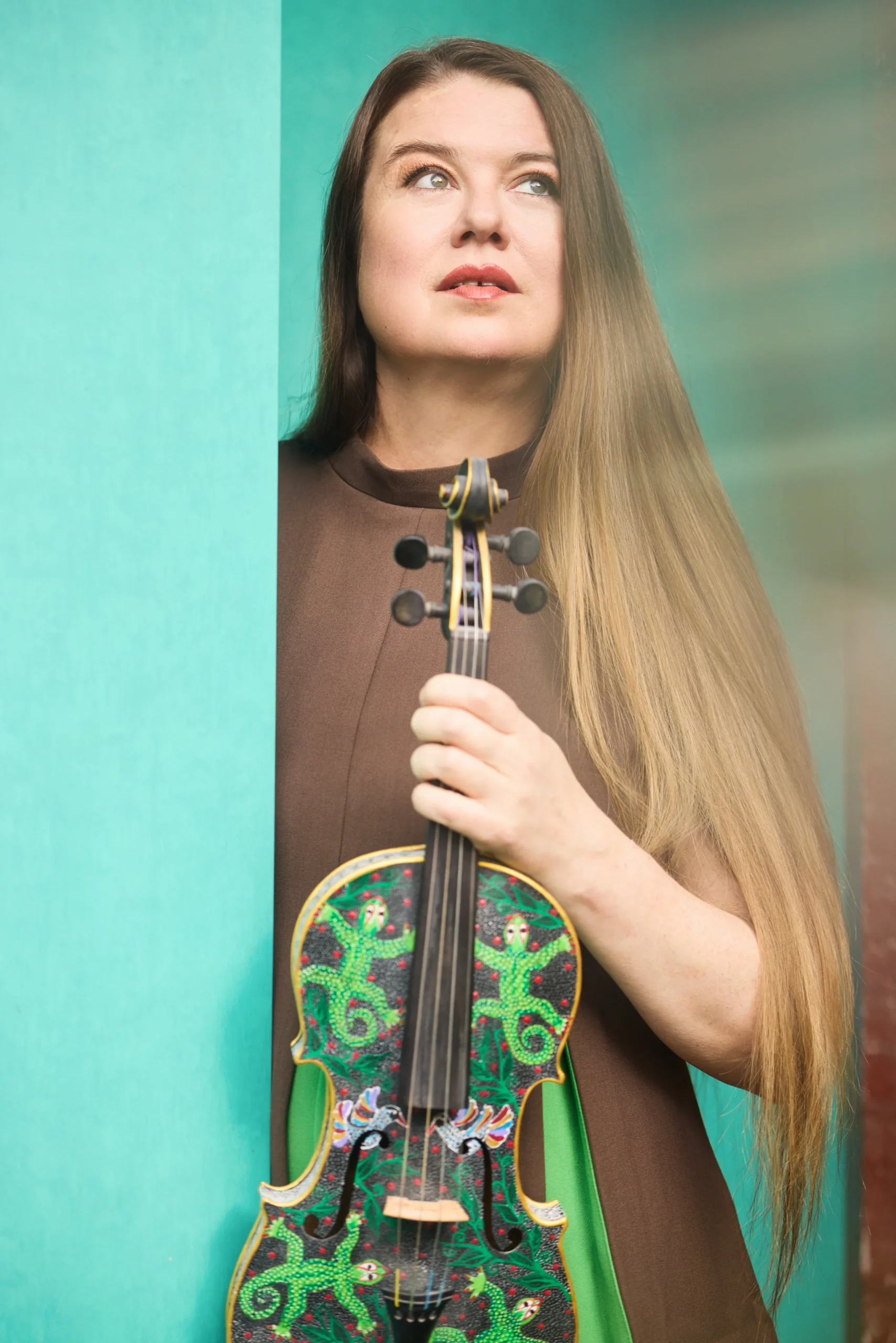
Lara St. John, violinist and activist
Finally, two screenings of the acclaimed documentary Dear Lara will be held on Monday, October 5, in the Montgomery Auditorium at the Parkway Central Library (1901 Vine St., Philadelphia, PA). Each screening will be followed by a roundtable discussion with Anne Midgette (writer and music/arts critic) and Patrick Hamm (documentary producer). Tickets are available from September 15th.
The project’s mission statement, quoted directly from its website, is a testament to the work and advocacy of Lara St. John: “In classical music, observers often ask, ‘Where are the women?’ Why do so few rise to become principal players, artistic directors, or internationally celebrated soloists? The answers are disturbing. Young musicians enter elite institutions where power is absolute and accountability is rare. Many are groomed, isolated, and abused while still children. When they speak out, they’re ignored. When they stay silent, they’re retraumatized. Too often, the only way to survive is to leave. Of the dozens of survivors Lara interviewed, fewer than half are still in music. Some can no longer even listen to it. Dear Lara breaks the silence surrounding these stories. It is the first documentary to expose the global pattern of abuse, silence, and complicity in the classical music world. It centers survivor voices – not just as testimony, but as a force for change. It calls out the institutions that failed, and invites the audience to imagine what healing and justice could actually look like. The time has come to put the lives of survivors above the protection of power.”
Philadelphia screenings of Dear Lara are scheduled for October 5, 2026. Scheduled viewings in other locations are listed on the documentary’s website.
Let us know what you’re listening to! Email us at info@wophil.org or use our handy contact form.