
There’s lots to listen to by women this week!

Missy Mazzoli, composer
On August 10 at the Tanglewood Festival’s Seiji Ozawa Festival Hall, the Tanglewood Music Center Orchestra will perform a concert celebrating American opera including arias from Gabriela Lena Frank’s El Último Sueño de Frida y Diego and Missy Mazzoli’s Proving Up. (Via the Tanglewood website.) This concert is listed elsewhere as including Tania Leon’s Scourge of Hyacinths. American opera has been enjoying the efforts of women composers in the past few years—Frank, Mazzoli, and Leon are among the foremost composers in the US today, and their work has earned no shortage of awards and recognition. Frank’s Frida y Diego had its Metropolitan Opera premiere during the 2025-26 season in a new production and was included in the Met’s Live in HD coverage.
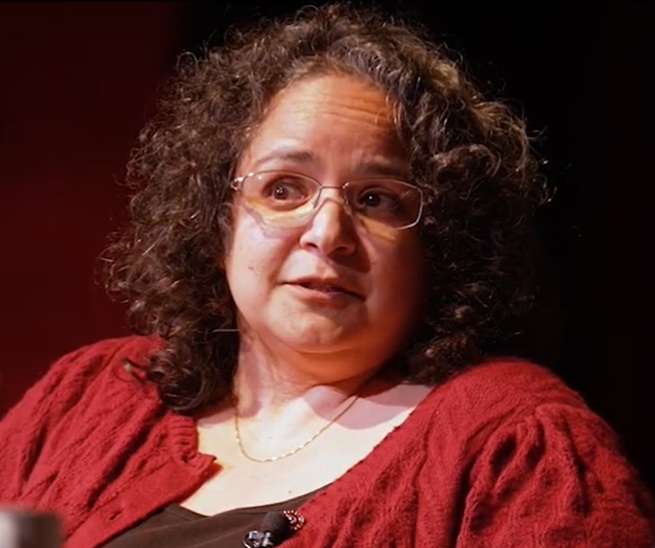
Gabriela Lena Frank speaking at University of the Pacific
Mazzoli’s 2018 opera Proving Up is an ode to the American Dream, based on a short story by Karen Russell. As I usually try to mention in Feminist in the Concert Hall, both new productions of recent large works and versions of works that are definitely contemporary but perhaps no longer new are important for working toward parity for women in classical music. It is exciting to me that not only are women composers having operas performed but that these performances are not world premieres. This suggests the beginnings of potential staying power for these works.

Gabriela Ortiz, composer, with GRAMMY Award
On August 10, the Orchestra of the Americas and the Penderecki Youth Orchestra will perform the German premiere of Gabriela Ortiz’s Antrópolis (2019). The piece began as an idea between Ortiz and flutist Alejandro Escuer, where they imagined a future piece that would celebrate and draw inspiration from Mexico’s legendary dance hall and bar/nightlife scene. Antrópolis became the title, drawing the concepts of the city and its changing soundscape as the listener travels through it into focus. This is not an uncommon theme in tone poems like this—a city is not as rigid as a program that we might expect to hear used in more traditional programmatic music based on myths or novels, but neither is it as abstract as the themes and developmental processes we might expect from more “absolute” genres (e.g., symphonies, fugues, etc.) Narrating the sound of the city over time leaves room for all kinds of creative references and musical interventions—snippets of dance tunes, changing moods, original riffs, and creative uses of orchestral instrumentation. It grew to life as a commission from Carlos Miguel Prieto in 2017 for a work to commemorate the American composer Philip Glass at a concert on his 80th birthday, to be performed by the Louisiana Philharmonic Orchestra at Carnegie Hall.
Below is a recording the work, performed by the Orquesta Sinfónica de Minerías (2019)

Dame Evelyn Glennie, persussionist
This week includes two important concerts for women happening at the BBC Proms. On August 11, Grammy Award-winning percussionist Dame Evelyn Glennie performs her genre-busting Late Night Proms concert with the Fantasia Orchestra and the BBC Singers at the Royal Albert Hall. The concert includes: “Sarabande” from Caroline Shaw’s Partita; the world premiere of The Wood Pigeon by Héloïse Werner, commissioned by the BBC; Meredith Monk’s Panda Chant II; and Orologeria aureola, composed collaboratively by Evelyn Glennie and Philip Shepard. On August 12, the LA Philharmonic and LA Master Chorale under the direction of Gustavo Dudamel will perform the UK premiere of Gabriela Ortiz’s Revolución diamantina. It is the title work on Ortiz’s first full album orchestral works, and responsible for her 2025 GRAMMY Awards: Best Classical Compendium; Best Orchestral Performance (with the LA Phil, Master Chorale, and Dudamel); Best Contemporary Classical Composition specifically for Revolución diamantina; and her 2025 Latin GRAMMY for Best Classical Contemporary Composition, also for Revolución diamantina.
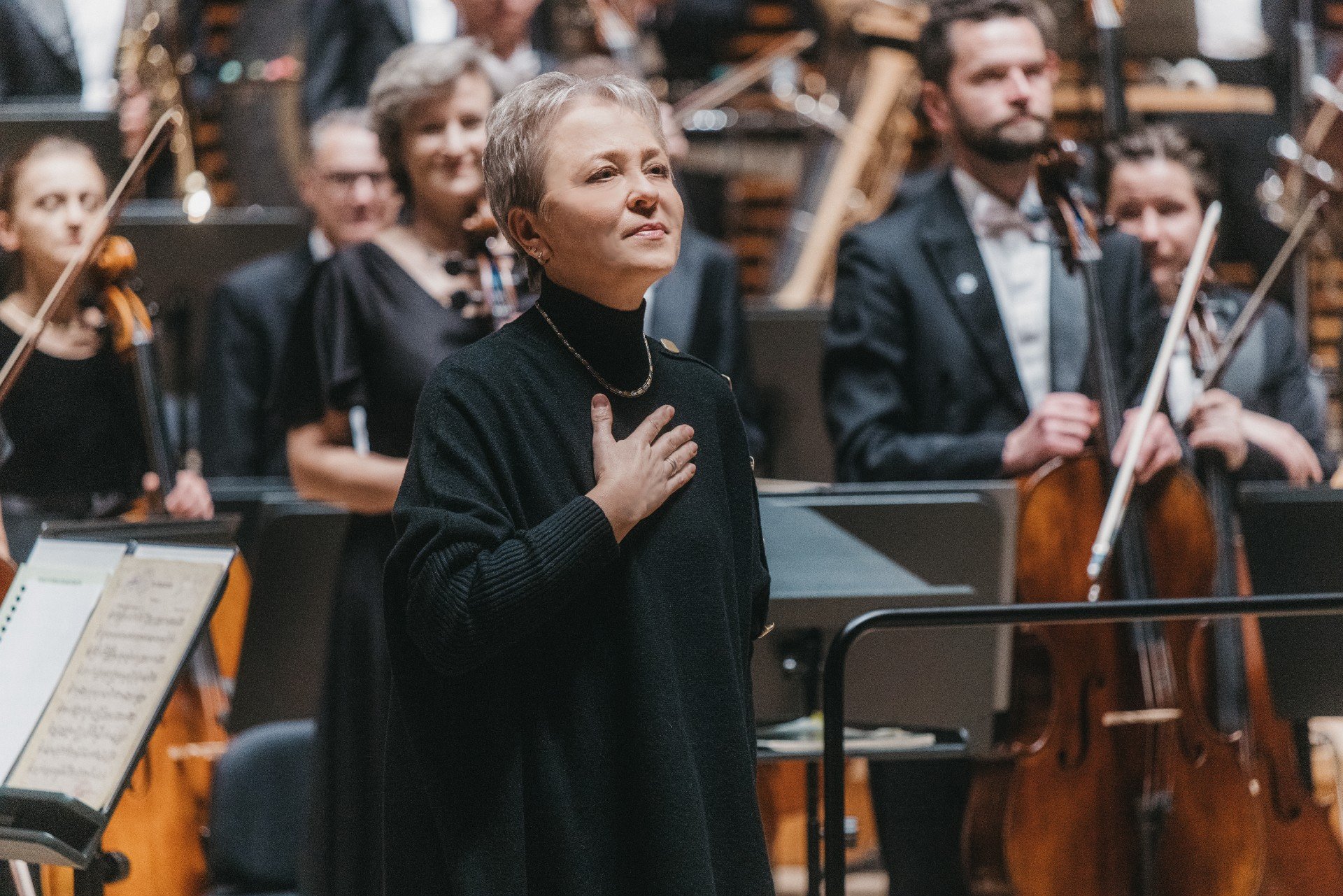 On August 16 and17, the Philadelphia Orchestra in Concert performs a program from the 2025/2026 season. Principal guest conductor Marin Alsop leads the orchestra, and includes Ukrainian composer Iryna Aleksiychuk‘s Go where the wind takes you…, based on a poem by Ukrainian poet Olena Stepanenko. The piece was commissioned by Classical Movements for the Taki-Alsop Conducting Fellowship, part of the Eric Daniel Helms New Music Program. The composer has dedicated the work to “Ukrainian women who, despite all the horrors of the war against Ukraine, do not lose their Courage, Hope and Faith in our Victory.” Copies of the score are available directly from the composer. The re-broadcast is hosted by WRTI on Sunday, August 16 at 1 p.m. on WRTI 90.1 and Monday, August 17 at 7 p.m.on WRTI HD-2. It will also be streamable through the WRTI website if you are not local to the station area.
Below is a recording of Go where the wind takes you…, performed in 2024 by the South Bend Youth Symphony Orchestras (a seven-county youth orchestra organization drawing from northern Indiana and southwest Michigan) directed by Robert W. Boardman.
Finally, congratulations go out to the Boulanger Initiative for another successful virtual course: Orchestrating Gender: The Forgotten Symphonists, led by B.I.’s Research Manager Dr. Caiti Beth McKinney and Lani Himegarner. One composer whose work was a particular favorite was Augusta Holmès (1847–1903)—a French-Irish composer, and who wrote cantatas, operas, solo piano works, symphonic poems, and over 100 songs. A composer of evocative programmatic music, her excerpts left course attendees delighted and thinking “Wagner? Wagner who?” Her tone poem Andromède (1883) is an excellent addition to the programmatic repertoire and makes fabulous use of the entire large orchestra, including a choir of trombones as the Oracle opening the poem. Modern critical print editions are available from Musikproduktion Hoeflich (Munich).
Below is a recording of Andromède, performed by the Virago Symphony Orchestra in 2020.
Let us know who you’re listening to! Email us at info@wophil.org or use our handy contact form.